

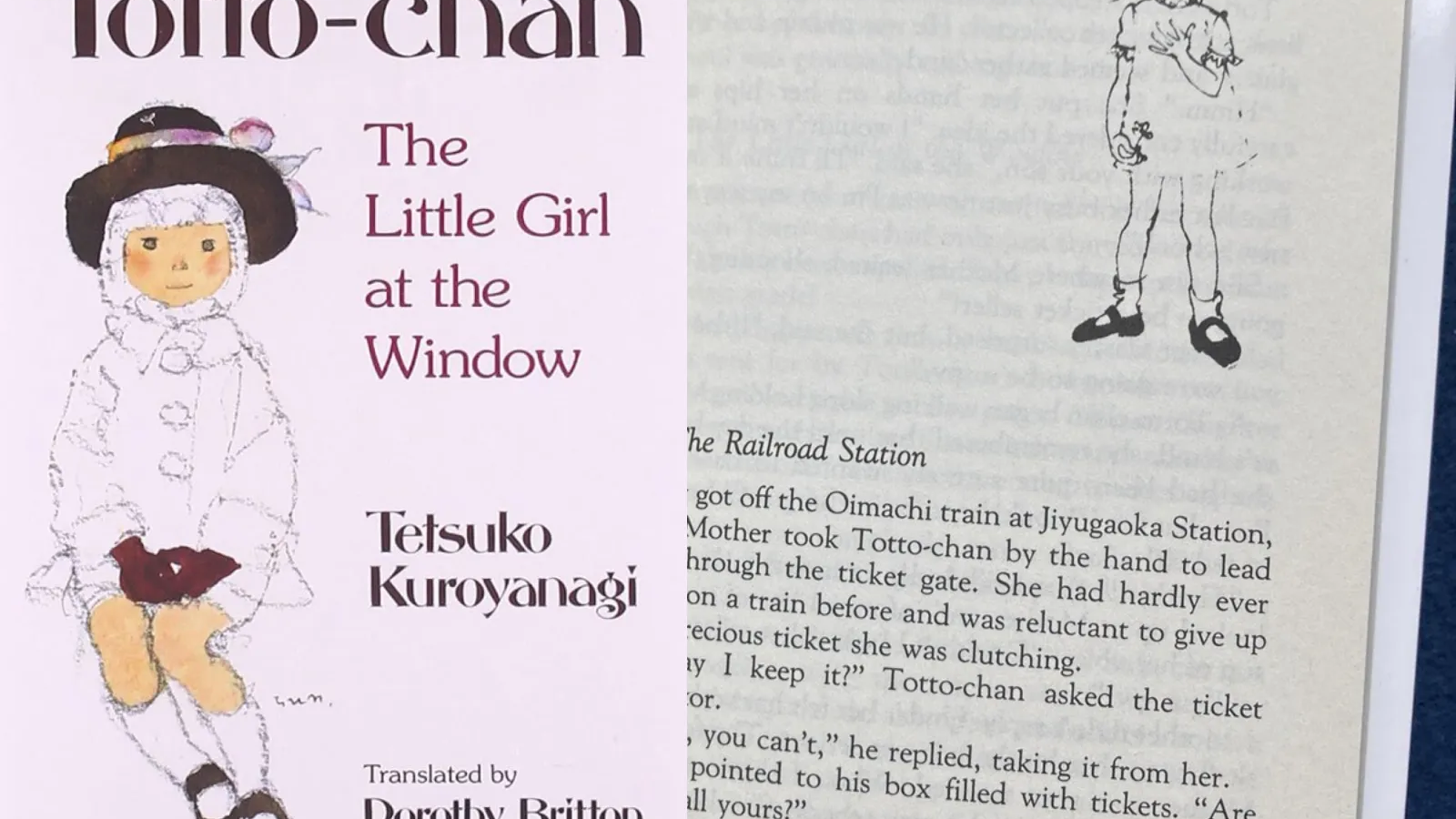
There are few books that make you smile, laugh, cry, and reflect on the meaning of education all at once. Totto-Chan: The Little Girl at the Window, written by Japanese television personality Tetsuko Kuroyanagi, is one such book. First published in 1981, it has since become an international classic on childhood and education. And here’s a bonus for Indian readers: it is also available in Hindi, which makes it accessible to parents who prefer to read in their mother tongue.
As a teacher who has spent over 30 years in classrooms, and as a parent who has watched her children journey through Delhi’s schooling system, I can say without hesitation—this is one of the most beautiful books ever written about children.
The Story of Totto-Chan
At first glance, the book is simply a memoir of the author’s childhood. Totto-Chan, a curious, energetic little girl, is expelled from her regular school for being “disruptive.” She asks too many questions, gets distracted, and cannot sit still in the rigid classroom system. For many parents, this might sound painfully familiar. How often have we been told by teachers that our child is “too restless” or “too talkative”?
But Totto-Chan’s life changes when her mother admits her to Tomoe Gakuen, an unconventional school run by headmaster Sosaku Kobayashi. At Tomoe, classes are held in old railway carriages. Children learn through exploration and conversation. They are not forced to stick to rigid timetables but are guided by curiosity. Meals are shared together, with an emphasis on balance—meat, vegetables, and rice—teaching not just nutrition but community.
For Totto-Chan, this school is not just an institution; it is liberation. And for the reader, it is a reminder of what education can be if only we respect children’s natural instincts.
Why This Book Resonates
The beauty of Totto-Chan lies in its simplicity. The stories are small, almost anecdotal—about a pet, a walk, a class, a conversation with the headmaster. Yet, together, they form a vision of education that is radically different from what we know.
As I read, I kept asking myself: what would happen if Indian schools adopted even a fraction of this approach? Instead of long hours of rote learning, what if children had space to chase butterflies, build friendships, and ask questions without fear?
In my own teaching experience, I have found that the brightest sparks often come from the children least suited to rigid classrooms. They are imaginative, questioning, sometimes mischievous. But in our system, these qualities are suppressed rather than nurtured. Totto-Chan shows us that such children are not “difficult”—they are simply waiting for the right soil to grow.
Lessons for Indian Parents
For Indian parents, this book is particularly important. Our society often equates education with marks, ranks, and prestigious institutions. Coaching centers mushroom everywhere, promising success if only children sacrifice their play and curiosity. But Totto-Chan reminds us that education is not a race. It is about shaping a whole human being—curious, kind, resilient, and balanced.
I often tell parents that one way to judge a school is not by its infrastructure or board results, but by the values it imparts daily. When I visited my children’s school, The Mother’s International School in Delhi, what impressed me was not fancy labs but the earthy, middle-class ethos that emphasized character over competition. Totto-Chan captures a similar spirit.
One striking anecdote in the book is how the headmaster took Totto-Chan and her classmates to see people with disabilities, not to evoke pity but to normalize difference. Imagine how powerful this is for children—to learn empathy not through lectures but through experience. This, to me, is true education.
Why It Feels Timeless
Although the book is set in wartime Japan, its message is timeless. Children everywhere want the same things: freedom to explore, adults who respect them, and a community that accepts them as they are. Reading Totto-Chan today, in the age of AI, gadgets, and exam pressure, feels almost revolutionary. It is a call to slow down, to let children be children.
“Children do not fail because they are restless. They fail when we do not have the patience to see their restlessness as curiosity.”
My Reflections as a Teacher and Parent
As a teacher, the book reminded me of moments when I failed to see a child fully—when I mistook chatter for distraction rather than a search for connection. As a parent, it reminded me of the importance of trusting children to find their way, rather than scripting every step for them.
My daughter, who later went on to IIT, was curious from an early age. She loved to explore math problems not because someone told her to, but because she wanted to. That curiosity was her Totto-Chan moment—the kind of spark that no coaching class can manufacture.
Why I Recommend This Book
- It celebrates curiosity. Instead of labeling children, it shows what happens when curiosity is nurtured.
- It critiques rigid schooling. Without bitterness, it shows how damaging strict classrooms can be.
- It inspires parents. It reminds us that children need more than homework—they need freedom, empathy, and space.
- It is accessible. The Hindi translation makes it a must-have for Indian parents across linguistic backgrounds.