

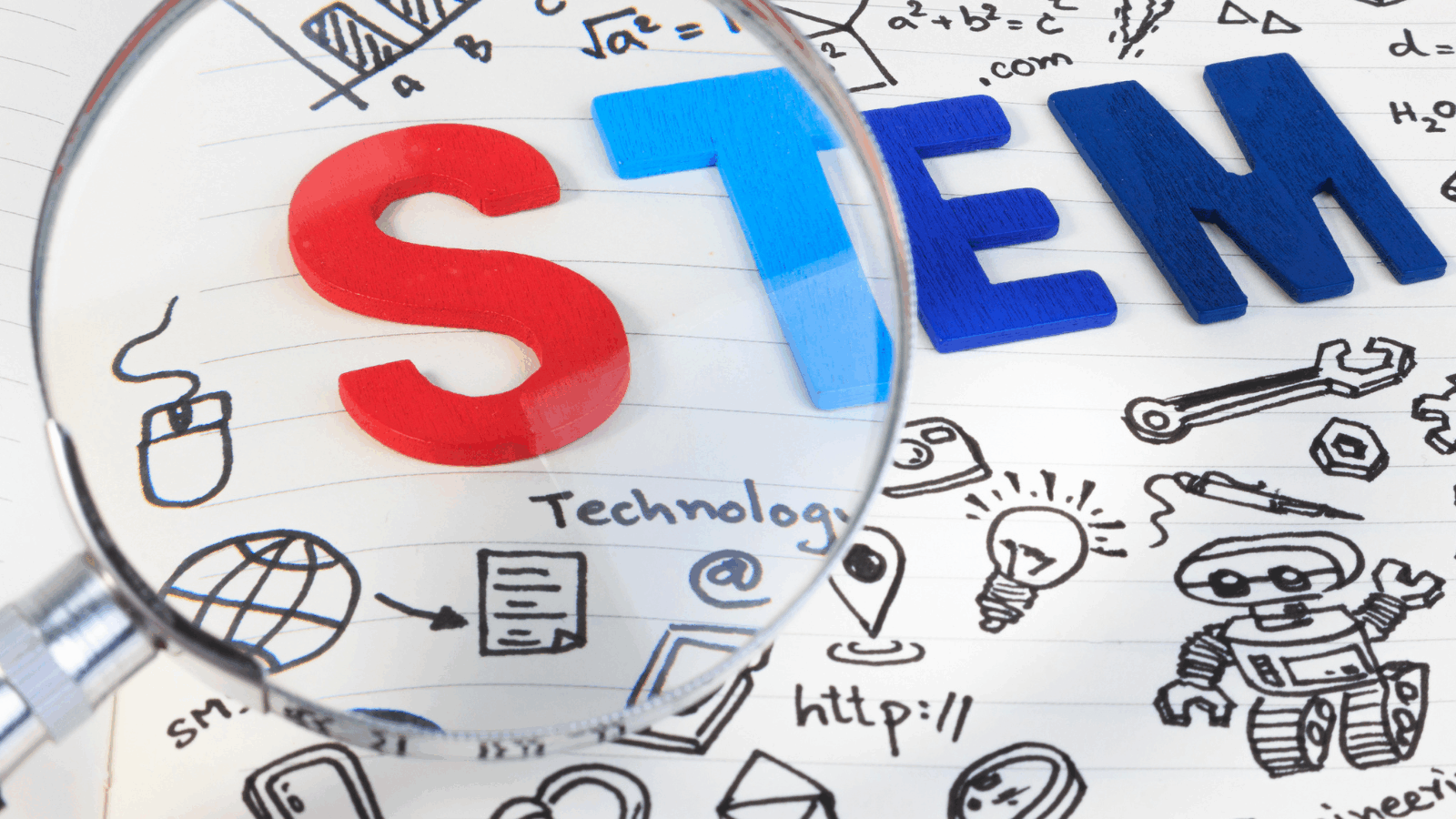
Walk into almost any middle-class Indian living room, and chances are you’ll find someone preparing for an engineering entrance exam. From IIT-JEE to state-level exams, engineering has for decades been the golden ticket. For families, it meant stability, prestige, and a shot at upward mobility. Yet, in today’s world where disciplines overlap and new careers sprout every year, the question arises: does the future really belong to engineering alone? Or is the wider umbrella of STEM—Science, Technology, Engineering, and Mathematics—the way forward?
This question matters deeply for parents, because the way they guide their children today will shape not just careers but also how their children think, create, and adapt.
For most Indian parents, the pull of engineering is almost instinctive. Engineering seats, especially in IITs, NITs, and IIITs, symbolize success. A seat in these colleges is celebrated with sweets, parties, and family WhatsApp groups flooding with congratulatory messages. But ask yourself—why this obsession with engineering? It is not just the subject. It is the prestige and the security it promises.
STEM, however, is a different way of looking at education. It is not just a set of subjects—it is an approach, a mindset. STEM asks children to see connections between math, science, technology, and engineering, instead of confining themselves to silos. For example, a student who loves chemistry but also enjoys coding may someday pioneer sustainable chemical manufacturing using machine learning. Or a biology enthusiast who pairs statistics with data science could create tools for public health.
Engineering is one lane on the highway of STEM. It is important, but it is not the entire road.
This perspective is important in India, where students are often funneled into coaching factories, trained to solve a fixed set of problems for JEE or NEET. Many succeed in exams but feel lost when faced with research projects, interdisciplinary roles, or ambiguous real-world challenges.
One of my students once told me about his cousin who had cracked IIT-JEE but struggled in the first year. The cousin had mastered problem-solving in a very exam-centric way, but when faced with open-ended questions in physics labs, he felt paralyzed. On the other hand, another student of mine, who was never a “topper” in coaching classes, went abroad to study data science where STEM-style thinking was encouraged. Today, she works on climate models combining math, coding, and geography—something that an exam-driven approach could never have prepared her for.
This is not to say that engineering is outdated. Far from it. India still needs civil engineers, mechanical engineers, electrical engineers. But the context is changing. Tomorrow’s engineer may also need to know AI ethics, climate policy, or behavioral psychology to build effective solutions. That’s where STEM gives an edge—it prepares children to think broadly, adapt, and collaborate across disciplines.
Parents often ask me: “So should I put my child in STEM or engineering?” This is where I think the confusion lies. STEM is not a course, it’s a philosophy. Engineering courses sit within STEM. What parents should ask instead is: “Can my child think beyond exams? Can they see connections between subjects?”
In India, the word “career” is still equated with engineering or medicine. But if you look at the world’s leading innovators—whether it’s Sundar Pichai, Satya Nadella, or Venki Ramakrishnan—they are not only engineers or scientists. They are problem-solvers who can connect knowledge across areas.
Here’s where parents have a crucial role. Instead of measuring children only by ranks and marks, we need to ask:
- Does the child show curiosity beyond textbooks?
- Do they enjoy applying concepts in new contexts?
- Are they given time to play, explore, fail, and try again?
Because in the long run, these qualities matter more than whether a child can crack a particular exam in a particular year.
A friend once told me something that stayed with me. She said: “When my daughter joined a top private university in the US, she realized her peers were not necessarily more intelligent. But they had been trained to think freely, ask questions, and collaborate. She had been trained to crack exams.” This contrast captures the dilemma many Indian students face. We are great at producing exam-crackers. But are we producing enough thinkers?
“Engineering is about answers. STEM is about questions. Both are needed, but the balance must tilt toward curiosity.”
As India transitions into a knowledge economy, this difference will be critical. A child with a pure engineering mindset may succeed in getting a job. A child with a STEM mindset may succeed in creating jobs.
Parents who grew up equating success with “engineer doctor IAS” may find this hard to accept. It feels like a risk to let children explore STEM pathways beyond engineering. But think of it this way: when calculators were first introduced, many parents worried children would stop learning math. In reality, children who used calculators effectively were able to focus on higher-order math. Similarly, broadening education from engineering to STEM is not about discarding the old—it’s about expanding the horizon.
India today is bursting with opportunities in space research, AI, biotechnology, clean energy, materials science. Engineering is still valuable, but STEM thinking ensures children are ready to contribute to these new fields.
The decision parents face is not a binary one: STEM versus engineering. It is about recognizing that engineering alone may not be enough, and fostering curiosity so children can use engineering as one tool among many.
If you are a parent reading this, here’s a simple takeaway: let your child explore connections between subjects. Encourage curiosity, even if it doesn’t immediately translate into marks. Support them when they show interest in combining math with music, coding with art, or chemistry with policy. Because tomorrow’s innovators will not be confined to one box.
In the end, it is not about what course your child takes, but about how they learn to think. And in that sense, STEM is not just a buzzword. It is the future.